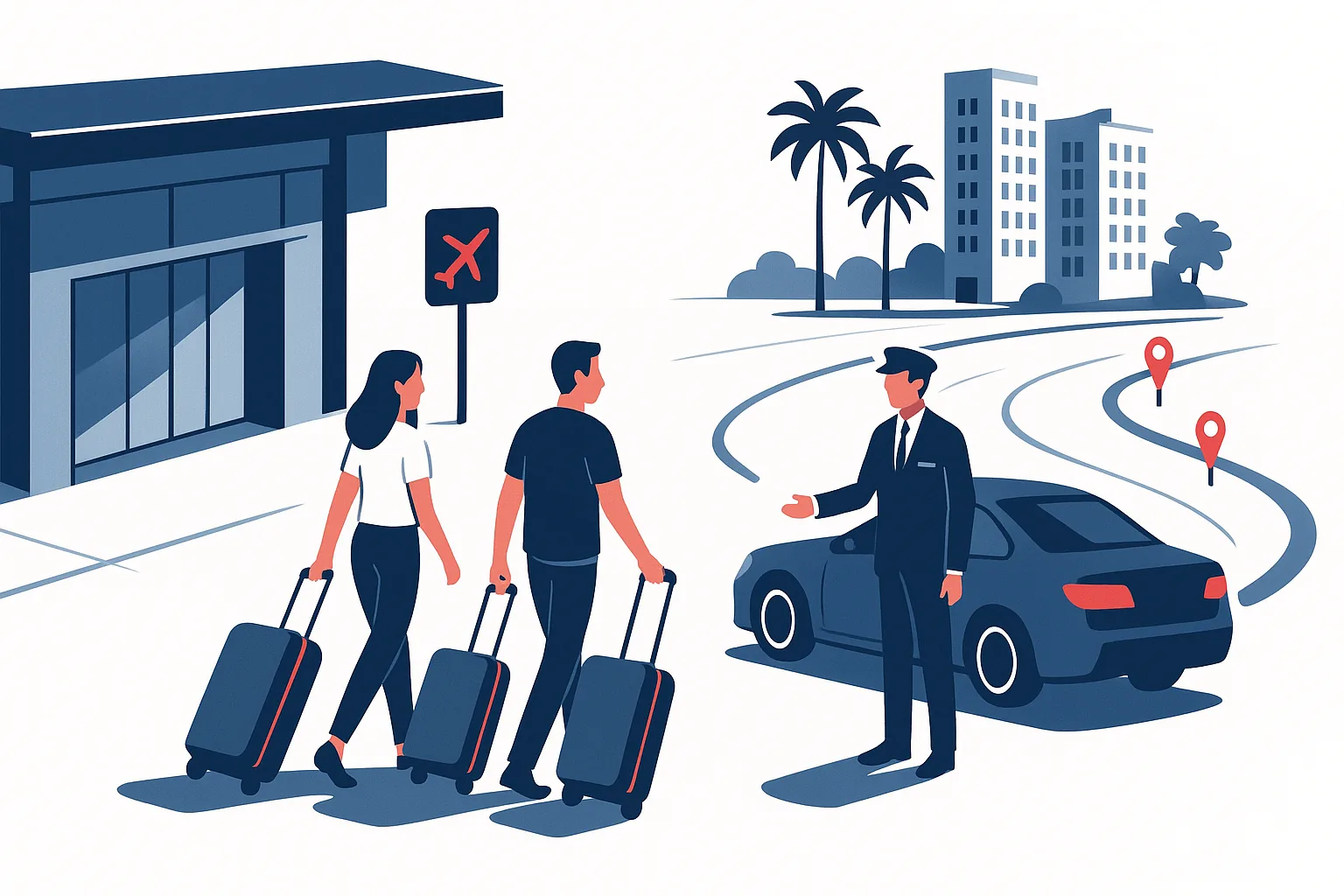


New York airport transfers are a frequent planning priority for visitors who want a smooth route from arrival to hotel. In this guide we compare JFK, LaGuardia, and Newark specifically for transfer convenience, common routes to Manhattan and borough hotels, and the practical decisions that matter for different traveler types.
New York airport transfers
Choosing between JFK, LaGuardia, and Newark shapes almost every arrival decision: which terminals you will use, how long you may spend in transit, which modes of transport are realistic with luggage, and how to connect to business meetings or family-friendly hotels. This article focuses on transfer choices rather than sightseeing, with actionable advice for airport-to-hotel planning.
Quick overview: how the three airports differ for transfers
Each airport serves a distinct set of airlines and neighborhoods and comes with its own strengths and trade-offs for transfers. Think in terms of terminal layout, ground transportation options, and likely destination neighborhoods when deciding which airport best fits your itinerary.
JFK is the largest and offers the most international connections. LaGuardia is close to midtown Manhattan and many Queens hotels. Newark sits across the Hudson and is commonly used for access to western Manhattan, New Jersey hotels, and some business districts.
Terminal and arrival logistics: what to expect
Arrival logistics affect transfer time even before you choose a vehicle. Consider terminal layout, immigration and customs flow for international flights, baggage claim, and how long it takes to exit to the curbside. These elements determine whether a public shuttle, rideshare, or private transfer is realistic for your schedule and luggage load.
International arrivals at any of the airports typically require passport control and baggage customs processing. Domestic arrivals streamline the on-ground transfer decision but can still involve lengthy terminal walks or shuttle rides between terminals.
Practical tip: enroll in Global Entry (or use Mobile Passport where available) to speed through U.S. customs — the time you save at immigration often outweighs extra transfer cost of using rail or rideshare instead of slower ground options.
Transfer options: taxi, rideshare, shuttle, private car, and public transit
When planning New York airport transfers, you will select from these core modes: yellow or green taxis, rideshare services, airport shuttles, private car services, and public transit connections. Each has pros and cons based on door-to-door convenience, luggage handling, and predictability during peak traffic.
Taxi and rideshare
Taxis provide a simple door-to-door option with regulated pickup locations at each airport. Rideshare apps let you request a vehicle sized for luggage or a group and often show live wait times. Both give direct connections to most hotels but remain subject to road congestion during peak hours.
Important notes by airport: at JFK there is a regulated taxi stand and rideshare pickup zones; at LaGuardia, rideshare often uses an offsite lot or dedicated curb depending on terminal; at Newark there is a centralized pickup area and drivers are familiar with cross-Hudson traffic patterns. Always confirm the terminal pickup point in the app or with your driver to avoid waiting in the wrong location.
Airport shuttles and shared vans
Shared shuttles can reduce cost by combining passengers, but they may make multiple stops. If you have time sensitivity (a tight meeting) or want to minimize waiting with children and luggage, consider a private transfer instead. Shared vans are best for budget travelers who can accept a flexible arrival time window.
Private car services
Private cars offer the highest predictability and luggage handling, and they are often favored by business travelers and families. If punctuality is critical and you want a direct, supervised handoff at the hotel, book a reputable service and confirm terminal pickup procedures ahead of arrival.
Tip: request meet-and-greet for international arrivals. Drivers will meet you in the arrivals hall and assist with luggage and customs timing, which can be especially helpful if you expect delays at immigration.
Public transit and rail connections
New York’s public transit options include rail links, buses, and subway connections. These are cost-effective and can be faster in heavy traffic, but they demand more effort with luggage and navigation, and sometimes require timed transfers between services.
Below are step-by-step public transit options for each airport, with practical notes about luggage and timing.
JFK public transit — AirTrain, LIRR, and subway
From JFK you can take the AirTrain to either Jamaica Station or Howard Beach. Jamaica connects to the Long Island Rail Road (LIRR) for a fast ride to Penn Station (Manhattan) and to subway services (E, J, Z lines). Howard Beach connects to the A subway into Manhattan.
Practical example: if you arrive at Terminal 4 and your hotel is near Penn Station, take the AirTrain to Jamaica, transfer to LIRR and travel to NYC Penn. This sequence is often faster than a taxi during peak hours, but requires carrying bags between platforms.
LaGuardia public transit — buses and Q70/SBS connectors
LaGuardia has no rail link; the best public transit options are bus connections to subway and rail lines. The Q70 Select Bus Service (SBS) connects terminals with the 74th Street–Roosevelt Avenue (Jackson Heights) subway hub and the 61st Street–Woodside LIRR station. The M60 bus connects to Manhattan’s Upper West Side and connects with the subway system.
Practical example: arriving at LaGuardia with a hotel in Midtown near the Roosevelt Avenue area, take the Q70 to Jackson Heights and transfer to the E, F, M, R or 7 depending on your hotel location. With light luggage this is fast and cheap; with heavy bags or small children it’s often worth a taxi or rideshare.
Newark public transit — AirTrain, NJ Transit, Amtrak, and PATH
Newark Liberty International Airport connects to Newark Liberty International Airport Station via the AirTrain, which links to NJ Transit and Amtrak trains. Trains from Newark serve New York Penn Station directly (about 20–30 minutes on a fast NJ Transit train), and PATH and local transit can be used for lower Manhattan destinations.
Practical example: for lower Manhattan or Jersey City hotels, take AirTrain to Newark Airport Station then NJ Transit to New York Penn, or exit at Newark Penn and use PATH or a short taxi if heading to Jersey City. Expect customs and AirTrain transfer time for international arrivals.
Which airport is best for different hotel neighborhoods
Choosing the right airport often depends on the neighborhood of your hotel. Midtown Manhattan, Lower Manhattan, Brooklyn, Queens, and New Jersey destinations each have different practical advantages when arriving through JFK, LaGuardia, or Newark.
Midtown Manhattan
Both LaGuardia and JFK are frequently used for midtown hotels. LaGuardia is closer geographically to central Manhattan, which can reduce ground travel time in off-peak traffic. JFK provides more flight choices for international arrivals and has rail connections that link to subway lines, though transfers may be necessary.
Recommendation: if you arrive early morning and want to avoid traffic, consider JFK plus LIRR to Penn Station; for a late-night arrival, a LGA taxi or rideshare to Midtown is often the simplest.
Lower Manhattan and Financial District
Travelers headed to Lower Manhattan sometimes prefer Newark for its straightforward rail and road routes across the Hudson. Flight schedules and airline choices can influence which airport is more practical for your arrival, especially for business travelers with morning meetings.
Recommendation: Newark can be faster to Lower Manhattan via NJ Transit to New York Penn and then PATH or subway, depending on your exact address. If arriving internationally, verify customs times and weigh a private car if very time-sensitive.
Brooklyn and Queens hotels
Brooklyn hotels often work well with transfers from JFK or LaGuardia, depending on the borough location. For Queens destinations, LaGuardia usually offers the most direct and shortest ground travel, while JFK remains ideal for international flights that require customs facilities.
Recommendation: for western Brooklyn (e.g., Williamsburg), JFK may be more convenient via a cab or rideshare; for eastern Brooklyn or most Queens neighborhoods, LGA typically wins on distance and door-to-door time.
New Jersey hotels
If your hotel is in New Jersey, Newark will often be the less complex option because it sits within the state and has straightforward connections to many New Jersey suburbs and business districts.
Recommendation: choose Newark for direct NJ Transit or local taxi access. If you prefer a private transfer, compare fixed-rate quotes and allow for New Jersey tolls on cross-Hudson trips.
Detailed airport-by-airport comparison: pros, cons, and common transfer times
Below is a concise comparison focusing on transfer-relevant factors (typical door-to-door time ranges are illustrative and depend on traffic, flight delays, and Customs). Always add buffer time for international arrivals.
- JFK (Pros): Many international routes; AirTrain + LIRR/subway options; ample taxi/rideshare infrastructure. (Cons): Larger terminal complexes, longer internal walking times. Typical to Midtown by car: 45–75+ minutes; by AirTrain + LIRR/subway: 40–60 minutes.
- LaGuardia (Pros): Closest to Midtown geographically; short taxi rides to Manhattan in off-peak times. (Cons): No rail link; buses can be slow with heavy luggage. Typical to Midtown by car: 20–45 minutes; by Q70/M60 + subway: 35–55 minutes depending on transfers.
- Newark (Pros): Direct NJ Transit/Amtrak rail to Penn Station; convenient for New Jersey hotels. (Cons): Across the Hudson with potential tunnel/bridge congestion. Typical to Midtown by car: 30–60 minutes; by AirTrain + NJT: 30–45 minutes.
Cost ballpark (subject to change): taxis and rideshares vary by time and demand. Public transit (AirTrain + subway or NJ Transit) is generally the lowest-cost option. Expect to pay more for private transfers and flat-rate taxi fares from JFK. Confirm current fares before you travel.
Scenario-based recommendations (practical examples)
Below are four realistic arrival scenarios with recommended transfer choices and why they work.
Scenario A — Business traveler, international flight, 9:00 AM meeting in Midtown
Checklist: choose the airport with the most reliable arrival time, factor in immigration, and prioritize a direct transfer to the hotel to minimize risk.
Recommendation: pre-book a private car from JFK or Newark depending on which airport your flight lands at. If you land at JFK and arrive early, AirTrain + LIRR to Penn Station and a short taxi to your Midtown hotel can be fast — but only if you have Global Entry or can reasonably clear immigration. For Newark, NJ Transit to Penn Station is another reliable rail option. Avoid shared shuttles that might add stops.
Scenario B — Family with two kids and large luggage, arriving late evening
Checklist: minimize walking and transfers, prioritize door-to-door service and meet-and-greet if possible.
Recommendation: book a private transfer or take a taxi/rideshare directly from the arrivals curb. LaGuardia’s proximity to midtown makes it an easy choice if your hotel is in Manhattan, but flows at all airports slow late at night — a pre-booked meet-and-greet will save time and stress.
Scenario C — Budget traveler with one backpack, flexible arrival time
Checklist: prioritize cost over door-to-door convenience, accept some walking and transfers.
Recommendation: use public transit. From JFK take AirTrain to Jamaica and subway/LIRR depending on destination; from LaGuardia use Q70/M60 buses to subway junctions; from Newark take AirTrain to NJ Transit. Watch for luggage allowances and platform stairs on some subway stations.
Scenario D — Late-night single traveler with early morning meeting
Checklist: ensure secure, time-guaranteed transport; minimize risk of delays.
Recommendation: pre-book a private car that guarantees pickup within a time window or take an official airport taxi. Rail options can be limited late at night; if using public transit check schedules and overnight service availability to avoid being stranded.
Luggage, families, and accessibility considerations
Travelers with heavy or bulky luggage, young children, or mobility needs often prioritize door-to-door transfers that handle bags and reduce walking. If public transit is the only practical option for your budget, look up station layouts and elevator availability in advance to avoid difficult transfers.
For families, a private car or pre-booked shuttle reduces stress on arrival, especially after long international flights. Confirm vehicle size when booking and request assistance if the operator offers meet-and-greet services.
Hotel access and curbside policies
Not all hotels have the same curbside access or loading policies. Some boutique hotels are on narrow streets with limited drop-off space, while larger hotels have dedicated valet and arrivals lanes. Check hotel arrival instructions before choosing a transfer mode to ensure smooth curbside drop-off.
If your hotel requires a valet or has a different entrance for arrivals, include that detail in your pickup notes or share it with your driver to avoid unnecessary waits or luggage handling issues.
Common mistakes to avoid when arranging transfers
- Underestimating time for immigration and baggage on international flights.
- Assuming the closest airport equals the fastest transfer.
- Not confirming terminal pickup zones for rideshare and private cars.
- Neglecting elevator or accessibility requirements when choosing public transit.
- Booking shared shuttle without accounting for multiple stops.
- Failing to factor in event-related traffic (parades, sports events, conventions).
Double-check pickup instructions in the confirmation email from your transfer provider and keep the hotel address and entrance notes handy for your driver or shuttle operator.
Timing and traffic patterns: planning for delays
Traffic conditions in the New York region vary by time of day and major event schedules. Allow more time for ground transfers during predictable congestion periods. If punctuality is essential, prioritize a private transfer service or a rail-based route that avoids road congestion.
When booking a connecting flight or planning a meeting on arrival day, include a buffer for immigration and baggage processing at international terminals. Reliable planning accounts for both airport-side processing and ground travel uncertainty.
Practical step-by-step planning checklist
- Confirm your exact hotel address and preferred entrance.
- Choose transfer mode based on luggage, party size, and accessibility needs.
- Allow a buffer for immigration, customs, and baggage when planning ground pickup time.
- Review pickup locations for your airport terminal—know whether you should meet at curbside, at a rideshare lot, or a designated shuttle stop.
- Share arrival updates with your hotel and transfer provider if you expect delays.
- Consider travel insurance or flexible bookings if your transfer is tied to an onward connector.
Following this checklist reduces surprises and helps ensure a calm arrival and transfer to your accommodation.
Costs and fare considerations (practical ranges and what they include)
Costs change over time and by demand, but use these practical ranges to plan your budget. Always confirm current fares and any surcharges (tolls, airport fees, tips) with your provider.
- Public transit: typically the lowest-cost option (AirTrain + subway or LIRR/NJ Transit). Expect to pay a modest fare for AirTrain plus subway or train fare; these are economical for solo travelers without heavy luggage.
- Taxi: metered fares from LaGuardia and Newark vary with traffic; JFK often has a flat fare to Manhattan (check the current regulated rate). Tolls and tip are additional.
- Rideshare: variable pricing depending on demand and vehicle size; it can be cheaper than private car services but may surge during peak times.
- Private transfer: highest upfront cost but includes meet-and-greet, guaranteed vehicle size, and door-to-door service — ideal for groups, families, and business travel.
Tip: compare a taxi estimate, rideshare fare in the app at the time of booking, and a private transfer quote so you can weigh cost vs predictability for your arrival.
Further planning resources and official information
For terminal maps, ground transportation details, and official airport advisories, consult the Port Authority pages for each airport. Their site lists up-to-date facility and traveler information and is the primary official resource for New York airports: Port Authority Airports.
For service area coverage and transfer options that apply across neighborhoods and hotels, see our coverage and service page on Airports2Hotel: Cobertura. Our planning resources include door-to-door route examples and booking tips to streamline your arrival.
What first-time visitors should know
First-time visitors often underestimate the size of New York airports and the time required to navigate terminals. If you are unfamiliar with the layout or arriving on an international flight, opt for a transfer option that minimizes walking and transfers with luggage.
Keep essentials accessible in a carry-on: hotel address, confirmation numbers, and a means to contact your transfer provider. Having a clear arrival plan reduces stress and helps you choose the fastest or most reliable option given your circumstances.
Preguntas frecuentes
1. Which New York airport is best for quick access to midtown hotels?
Midtown access depends on traffic and terminal-to-curb times. LaGuardia tends to be geographically closer to many midtown hotels, but JFK also serves midtown well and offers rail links that may avoid heavy road congestion. Evaluate rail options, pickup logistics, and your arrival time before deciding.
2. Is public transit practical with lots of luggage?
Public transit can be practical for travelers with compact luggage and a willingness to manage transfers, stairs, or station walks. If you have bulky bags, small children, or mobility needs, consider a door-to-door transfer for greater convenience.
3. Should I pre-book a private transfer or wait for a taxi on arrival?
Pre-booking creates predictability and can be useful for business travelers or families. Waiting for a taxi or rideshare works well for flexible itineraries, but double-check terminal pickup rules and allow for potential waits during busy periods.
4. How do I manage transfers if my arrival and hotel check-in times don’t align?
Coordinate with your hotel about luggage storage options if you arrive before check-in. Alternatively, plan a short activity nearby after drop-off or opt for a flexible transfer that allows a wait time if you need immediate room access.
5. Where can I find official airport updates and terminal maps?
Official terminal maps and traveler advisories are available through the Port Authority’s airport pages. Use their site for the latest facility information and guidelines: Port Authority Airports.
Conclusion and next steps
New York airport transfers require practical trade-offs based on hotel location, luggage, and desired predictability. Use airport choice, pickup logistics, and mode of transport to shape a plan that suits your priorities. Remember to check official airport pages for terminal-specific guidance and to confirm service details directly with your transport provider.
If you want support choosing the most suitable transfer for your New York itinerary, Airports2Hotel can help you compare options and plan door-to-door routes aligned with your schedule and hotel: our planning resources and coverage information are designed to make airport-to-hotel transfers easier and more reliable for travelers. Book or plan with us as you finalize your arrival arrangements for the best peace of mind on arrival.